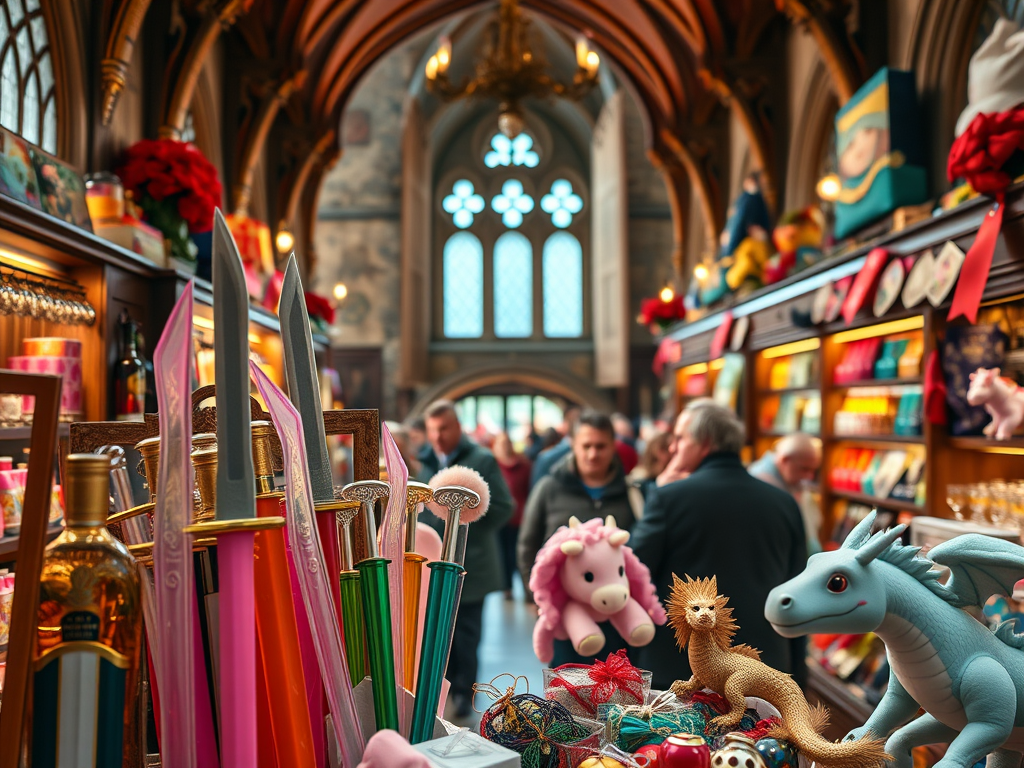
Plastic toy swords, pink unicorns, and a bowl full of squishy dragons were the culprits in a castle gift shop. What they did was hard to describe. It was hard to know where any of this rightly began and ended, or where the sense in it was. But what was clear was that something was out of balance here, and it didn’t feel right. There was something “off” about all of this. Some other kind of dragon was in the process of being created. And it was the mixed-up priorities that were bringing it to life. While some starve, others buy dragons.
The unicorns are sold in a gift shop on the banks of a highland loch. They are sold alongside a range of fine whiskies, shortbread, and chocolates. You can also find tweed dog coats, luxurious cashmere scarves, golf kit, and key rings – you name it. This is the essence of the modern castle experience. It includes a wander about the grounds and a short film outlining a noble history of warrior clans and chiefs. This is followed by the buying of luxury items or tacky toys made cheaply on a foreign continent. What does it all mean?
For one thing, it has created a market. There is a market for tourists to come to this place. There is a market for rental accommodation. There is also a market for selling gifts: some are high-end and luxurious; others are cheap and nasty. But all are at marked-up prices. And people come. Hundreds of them. The roads buzz with traffic. Carparks are at a premium. The castle grounds stream with a river of people of all nationalities. Accommodation has become unaffordable for those working to sell the plastic dragons and unicorns and luxury goods to the tourists.
Over in China, someone is making plastic dragons. When I say making, churning them out on a factory production line is probably closer to the truth. And likely for meagre wages. Right here, there is also employment. There are jobs in manning carparks and selling souvenirs. This great array of jobs keeps a large number of people employed. The reason or purpose behind any of this work is less clear. Is this really what people want? This great circle of consumption, resource use, cheap labour and inequality? A job serving tourists hardly offers a secure existence. Tourists have vastly superior spending power. The wages of those who work for them are modest.
At the same time, humanitarian organisations encourage us to donate our spare cash so that children in Gaza can eat. They use messages like: “Nearly every humanitarian response is critically underfunded. Every cent counts, and saves lives. Contribute today!” Every cent counts. Try telling that to a tourist seeking pleasant experiences, buying whisky or a tacky plastic dragon for their child. “Look here. You are on holiday buying gifts for those you love so much that you would give them anything in the world. Even that squishy plastic dragon. But wait…every cent counts! Contribute today! Humanitarian responses are critically underfunded, PLEASE!!
No, capitalism is too well-entrenched for a one-on-one dialogue of this kind to have any noticeable effect whatsoever. For there is still the hope that once there is peace, once everyone has enough to eat and can go to school, then we can all aspire to live like this. We can go on holidays and buy luxury items or tourist junk. We can stay in fancy hotels and stream through historic sites in vast numbers, saying how lovely it all is. We call this the free market. We even call it democracy.
As long as this system is maintained, there will be inequality. There will be those who go without. There will be those who do it hard. Everyone is expected to earn a living with no real regard for the starting lines or the differences in wealth. The inequalities that exist are vast, and a few cents here and there towards humanitarian campaigns won’t fix it. The real dragon continues to grow. The destruction and misery it creates should not be underestimated.
Then there are the people in suits giving lectures on humanitarian action. They are far removed from the action. Some go on the occasional foray to the frontline. But their reality is not the daily experience of those they aspire to serve. They make a career for themselves. They occupy or carve out a niche where their own upkeep is maintained and paid for. We can hardly blame them. Everyone needs income, whether they clean toilets or choose to wear a suit. But all anyone really needs is some food and a basic place to live.
A potential solution lies in the radical re-thinking of priorities. What is it that we actually need? Like the people humanitarians seek to help, what basics do we need for the next day? What about the next week, month, and year? It’s not too complicated: water, food, clothing, shelter – Maslow’s hierarchy of needs again. We don’t need paintings, antiques or objects de art. We don’t need hand bags or fashion accessories. Some amount of technology is useful. Yet we don’t need most of the gadgets and junk that have flooded the market. We don’t need whisky or pink unicorns. We don’t even need holidays to faraway places.
If we all stuck to what we needed, the world would likely have more than enough resources to go round. Holiday rentals sit empty half the year, waiting for someone to spend a few nights there. They could be housing the homeless. Plastic tourist junk would no longer be made. Factories would be repurposed to make something more useful and less environmentally wasteful. Food would be eaten, not thrown away half finished. Jobs might even start to have meaning and value. Their foundation would not be creating more wealth, or pursuing ever greater growth. And the basic humanitarian standards set in places like Geneva, would be usefully viewed as all that anyone needs.
Image Credit: AI
 Fuzzy Brown Line