-
Reflections on a Winter in Ukraine
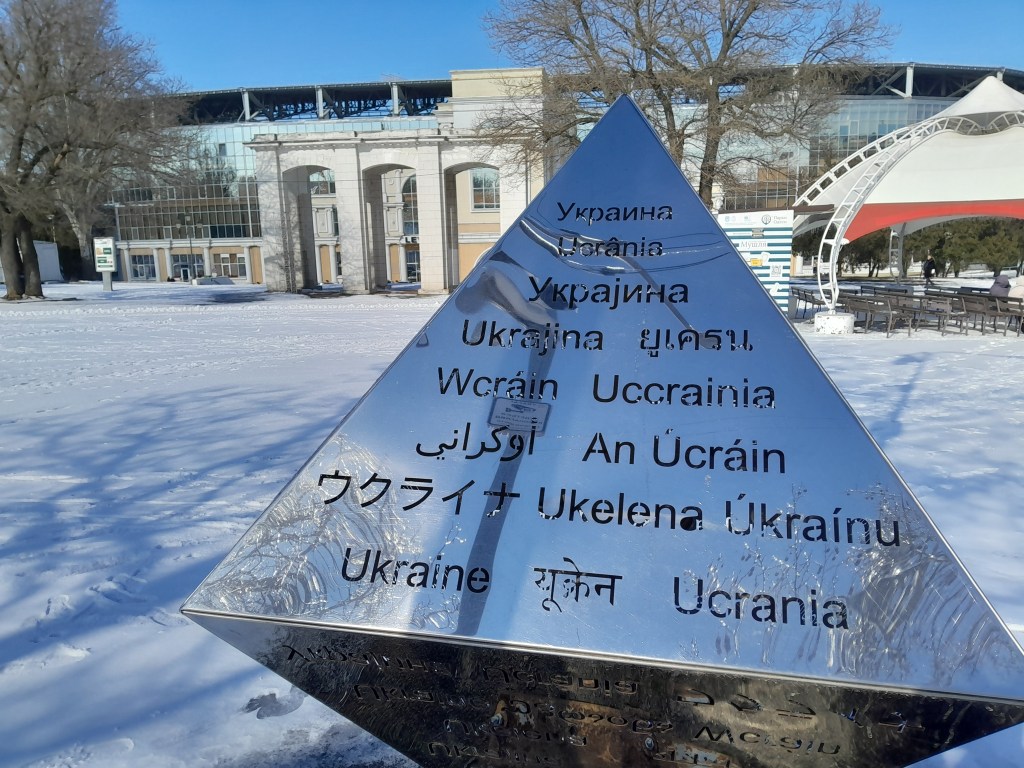
Lessons in warmth and humanity
If there is one thing that sums up my time in Ukraine, I think it is this. It would be hard to go there and not leave with a sense that here are people who manage to keep showing up, even under the most trying conditions. And not just showing up, but holding on to the warmth and colour and spirit that makes us human. At the Goncharenko Centre, a hub for weaving camouflage nets, I also saw all manner of craft classes taking place – from the creation of Christmas decorations and bracelets, to colourful toys and ornaments. On the weekends there were language classes – I participated in the English sessions, but there were other languages on offer too. During the time I spent with the organisation “Food for Life”, I helped cook vegetarian meals – these were prepared from scratch every morning, ready for distribution to those in need by lunchtime. Many people came to volunteer in the kitchen – young and old, Ukrainian and foreign, men and women; religious and atheist.
When I thought about the volunteering itself, it occurred to me that it was not just about giving to others, but also about the connection and spirit it fostered, and the sense of happiness and warmth it gave. As a foreigner, I feel it is a privilege to have the time and opportunity to do it – not everyone is in a position to do so. Those three months felt meaningful, more meaningful than a lot of other things I’ve done. For some Ukrainians I talked to, it is a necessity – something that simply has to be done. Yet I felt that the people I met were also happy to be there – the sense of spirit and community was strong. Sometimes, when I got on a bus or walked down a street, I wondered how many people were involved in something like this. I really had no idea. There were times in public places when I was struck by a sense of people being worn out, and of life being bleak and grey.
The boy on the bus
One of the main methods of public transport in Ukrainian cities is the humble маршрутка (marshrutka) or share taxi. Marshrutkas are typically a small yellow bus, although they also come in other colours, that travel a fixed route and charge a fixed fare. To me, they are closer to a bus than a taxi in both appearance and function. The marshrutkas are typically well utilised, and it is not uncommon for there to be standing room only. It was on one of these marshrutka journeys that I found myself standing next to a boy who I judged to be about fourteen or fifteen. He had a camouflage-coloured hat suspended from its string around his neck. On his lap he held a bag with various sewn on patches – some kind of skull, a fighter jet, and other military themed things I couldn’t work out. He looked glumly out of the window. If he was about 14 or 15, he would have been 10 or 11 when the war started, which meant that he was coming of age in a country at war. I considered that if I saw the same boy on a bus in Western Europe, I would probably feel some concern about his apparent interests, and whether he was OK. And yet in this context, he seemed almost unremarkable. He had every reason to be glum. Maybe he would sign up for the military as soon as he was old enough – if the patches on his bag were anything to go by, it would seem likely. Although he might be exactly the kind of boy the country wanted, I felt a heaviness on his behalf.
The old lady on the corner; the old man at the intersection
I was shocked, on a cold dark night, to find an old lady selling items on the street not far from my lodgings. She sat half-asleep amongst a collection of old soft toys, hats, a bedroll and various household items. As soon as she noticed me her face lit up in a bright smile. Yes, she was OK. She had an apartment not far away, just around the corner a bit, she said. It was on the spacious side, the pension was small, and the heating bills were higher in a bigger place. She was doing what she could, she said. I saw the man at the intersection more than once. He too looked cheerful, and exceedingly grateful to receive what small change I had in my pocket. I was told elderly people can get a heating allowance, but still there were these cases of hardship. With all the funds going to various initiatives, I wondered if this was a demographic that was being overlooked. Yet the people themselves might well say that sitting on a cold street corner for a few hours was simply their contribution to the war effort.
Dinner in the dark
The frequent power cuts didn’t bother me so much, as did the reason for them. There is something uniquely depressing about sitting in a dark flat, eating cold food, because someone has deliberately struck and destroyed parts of the power supply — again. I could say I come from a background of making do. The power cuts and occasional lack of water were not unlike the days when I tried to run my life off two small solar panels in a grey Winter, and a 1000 litre water tank in a dry Summer. But the reasons for it were much different. My camping lifestyle was at least to some extent self-chosen. This was externally imposed. And I was aware that it would be much different if I had young children to take care of, for example. As it was, dinner by candlelight became something of a regular thing and I rather enjoyed it.
A couple of times the power cuts lasted for a few consecutive days. At one point I noticed the milk had gone off — the fridge was at room temperature by then. Having disposed of it, I unthinkingly picked up another bottle the next day, only to arrive home and remember –that’s right, no power! Then it occurred to me that I could put the milk on the windowsill outside, and that it would keep very cool out there. It was a bit precarious, and I considered that if there were a gust of wind or a heavy blast during the night, then the milk would end up in the neighbour’s courtyard below. They might get a fright. No, the neighbours round here were used to more than flying milk bottles. In fact, a flying milk bottle might actually be a welcome change. The windowsill fridge was a winner.
The man under the tree
The two occasions on which I have had dealings with the emergency services in Ukraine had nothing to do with war — at least not in any direct sense. They were both cases where alcohol was very likely, or almost certainly, involved. And now, as I walked towards the bus stop at the end of my time in Ukraine, I came across a man slumped beside a tree in the middle of a pedestrian area. My first thought was that he was probably drunk and sleeping it off. It was a rather unfortunate and uncomfortable-looking sleeping spot, but what to do? There was not really much that one could do, at least not in the space of a few minutes as a passer-by on the street. I also had the same thought I had had before – that calling the emergency services would possibly mean taking them away from something vastly more urgent, to something which they too could do little about. There was the possibility that he had some medical condition that was not alcohol related, yet I had the judgemental thought that it probably was alcohol, and that in this case it was his own fault.
Normally, whether something was or wasn’t someone’s own fault wouldn’t really factor into my thinking. But in this context, it did. When missiles were flying about, and part of the population were away fighting and risking their lives at the front line, and other people were keeping busy with other necessary stuff, what right did anyone have to be lying around on the street being drunk? And what hope could they have of assistance? Still, it felt there should be something that could be done about it. This was the third incident of its kind that I’d come across. People passed by – it was likely a familiar scenario, acknowledged in a characteristically local way by flicking one’s neck a couple of times. At least I’d learnt that much. This was silent shorthand for “drunk”. I had already reached the conclusion there wasn’t much more I could do, and so I too carried on. As I said before, these incidents had nothing to do with the war. Or maybe they did.
All men, please present your documents
The great manhunt. Now we were at the border, and every man on that bus had better have their reasons. This was a case of every man potentially being a Wanted Man. I felt a gnawing anxiety. Suppose there was a man on board that had just decided they needed a break? Or a man whose partner, and maybe his family, were elsewhere and he just wanted to go and visit, no questions asked? All the men on that bus would have to be too old, too young, too broken, in possession of too many children, or in possession of just the right document, or somehow else exempt from the need to potentially serve in the military. Unsurprisingly perhaps, it seemed that all the men on board fitted into one of these categories, and we could proceed to the next checkpoint.
I feel ‘The Wanted Man Policy’, as I’ll call it, is counter-productive. I considered some of the human rights implications of potentially being forced to go to war in a previous piece, and there are many. But this idea that men can’t leave the country unless they have been exempted or excused or given some kind of formal waiver, really doesn’t seem to have a lot going for it. For one thing, taking a break from a country at war seems a reasonable thing to do. And for another, I cannot see how shackling all fighting age men to the country at a time when the country itself is economically hobbled, makes much sense at all. If the men who have no intention of fighting could leave, then they could do what many women have done – pursue training and employment options elsewhere. This would mean they have skills that can be brought back to Ukraine, money that can be invested into Ukraine, and more hope for the future. A second reason against imposing this level of restriction is that any coercion of this kind risks destroying goodwill and breeding resentment. And so, after three months of warmth and hope despite ongoing drone attacks and regular power cuts, it was with an altogether different feeling that I crossed the border out of Ukraine.
-
Rogue interference in the name of regime change
Trump has bombed Iran. It is less than a week ago that this news aired, and already there is a rapidly unfolding conflagration across the Middle East. A series of knock-on events have been set in motion. Lives have been lost. Lives have been disrupted and uprooted. The trigger for all this were the actions of one man, who just so happens to be the POTUS. There is one thing I want to consider in light of these developments, and that is the reactions of some to what the POTUS has unleashed on Iran and the surrounding region. I had thought I would write about something in a similar vein back in January, when he gave orders to storm into Venezuela and grab president Maduro and his wife. Indeed, I started writing about it then, but things moved quickly and I decided much of what I would say had already been said. It wouldn’t add anything new. Nevertheless, I have come back to it because I feel that it matters. Recent events have generated responses from some quarters that I feel compelled to respond to.
Back in January after the American action against Venezuela, the leader of the Venezuelan opposition, Maria Corina Machado, took the rather unusual step of offering to share her Nobel Peace Prize with the POTUS. She is quoted as saying that she wanted to “give it to him [Trump] and share it with him” on behalf of the Venezuelan people. “What he has done is historic. It’s a huge step towards a democratic transition”. I was troubled by this stance at the time, particularly coming from a Nobel Laureate. Was this a reaction in the moment, or something Machado had given a lot of thought to? More recently, in light of Trump’s actions in Iran, president Zelensky of Ukraine has taken a similar position in voicing his support for Trump’s action against a political regime that has been the cause of much suffering. Specifically, Zelensky referred to the Iranian regime’s complicity in supplying parts to Russia, such as those found in Shahed drones.
Now, in both Machado’s case and Zelensky’s, I can understand that they are politicians and leaders in countries that have been subject to noxious, bullying regimes – be that internally, or through military invasion. It is therefore understandable, to some extent, why they might be supportive of radical intervention in, or military action against, such regimes. Nevertheless, there are a number of red flags which immediately come to mind as to why Trump’s intervention in Venezuela, and now in Iran, do not inspire anything close to the kind of gratitude that Machado expresses, or the support that Zelensky professes. Here are some of those flags:
- In the words of the old saying: “Two wrongs don’t make a right”. That is to say, even if we considered Maduro’s position as head of state to be entirely undesirable and illegitimate, removing him in an illegitimate way doesn’t somehow render it right. Likewise, the Iranian regime’s involvement and complicity in terror, brutality and potential weapons manufacture, doesn’t somehow render an unprovoked US attack acceptable, or the assassination of its head of state.
- Regime change: When Machado claimed Trump’s actions in Venezuela were a “huge step towards a democratic transition”, I wasn’t sure if all of Trump’s very mixed motivations were being taken into account. In Venezuela, there were Trump’s interests in the oil industry. In Iran, a threat posed by the development of a potential nuclear weapon was given as justification. So were historical grievances dating back decades, as was America acting pre-emptively to protect its own interests. Taking all of this into account, how much can promotion of positive ‘regime change’ really be hailed as a genuine motivation of these interventions?
- ‘The will of the people’: the POTUS himself and various commentators have suggested that this is an unmissable opportunity for the Iranian people to exercise their political will and rights, just as it supposedly was for the Venezuelan people to exercise theirs. I feel that this is naïve at best, given it is a very sudden and unpredictable way to try and provoke such change. Second, I am doubtful as to what kind of foundation for change a sudden military intervention of a large foreign power in the regime of another sovereign state can lay. And third, it reeks of arrogance for the POTUS to suggest that this kind of reckless American action is what will trigger the ‘will of the people’. Support for a peaceful transition and true empowerment brings to mind something that would look quite different.
Finally, Israel’s involvement, or more specifically Netanyahu and the Israel Defence Force’s (IDF’s) involvement in what is currently unfolding in Iran and the wider region, is even more disturbing given their recent actions in Gaza. In light of this, suggesting that the combined actions of Israel and the US in Iran are somehow the harbingers of peace or a welcome way to bring about regime change, seems a very dubious proposition.
Amongst the commentary condemning the attack on Iran there is once again mention of the rules-based international order. It would seem there is really very little left of it. I, for one, am sceptical as to how much-repeated invocations for the rules-based order to be upheld and respected will have any discernible impact on what happens from here. The rules-based international order was a time when heads of state generally acted with greater restraint, less naked self-interest and at least some respect for rules and negotiation. What we are living in now is arguably much closer to the puppet-based international order. Here, we have the last-ditch attempts at negotiation over nuclear weapons between Trump and Ayatollah Ali Khamenei. And, in a recent episode of “This Authoritarian Life – The World’s most ruthless self-care podcast”, presidents Putin and Xi model positive dialogue patterns, taking Trump’s anticipated action against Iran as their starting point.
Wherever you may be reading this from, may you find peace in your heart.
-
C’est La Vie
A very large, intricate icicle has formed outside my window. It is growing down from the roof in a series of complicated bulges and icy fingers with drips on the end. The branches of the trees are coated in an icy glaze which suggests the street, and particularly the footpath, will be like a skating rink. It is Saturday. I wanted to go back through my photos and find something I was reminded of when writing my last blog post. It was this photo, taken in 2022 on a street in Ukraine.
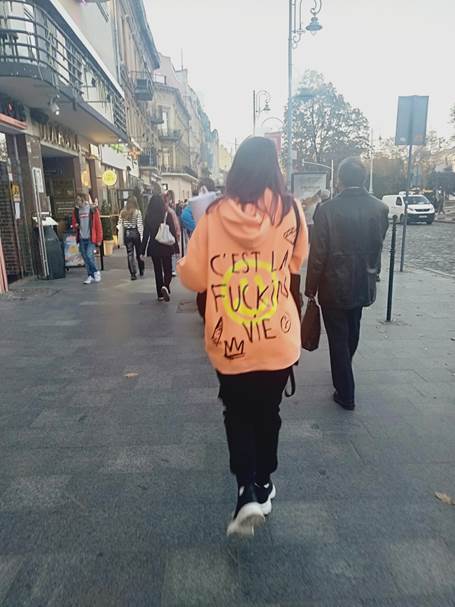
In that context, wearing that hoodie – it was classic. I wondered if it was a hand printed design. Was the pointy thing at bottom left meant to be a missile? And yet, there was also something starkly less than amusing about it, particularly in a place like Ukraine in 2022. I think the inclusion of the f-word captures that part of it rather well.
C’est La Vie: “The iconic French phrase c’est la vie literally translates to “that’s life” or “such is life.” In other words, “This is how it is” – often with the implication that there’s nothing you can do about it.”
As the article I linked to above points out, this can be a good thing – signifying acceptance of the things we cannot change. It can also be negative. Too much “C’est La Vie” and we get passivity and little in the way of change. So, maybe “C’est La F****** Vie” actually isn’t a bad way to express the conflicting dual nature of this French phrase.
In honour of the saying, here is a selection of “C’est La Vie” songs:
- Khaled – ‘C’est La Vie’. A catchy blend of Arabic and French, with heartfelt lyrics. (Here’s the English version).
- Chuck Berry, ‘You Never Can Tell’: “C’est La Vie say the old folks, it goes to show you never can tell”. The story of a teenage wedding.
- B*Witched, ‘C’est La Vie’: a blast from the 90’s. This takes me back to my school days when come lunchtime everyone would transform into a Spice Girl or Backstreet Boy, or some other choreographed boy/girl group, like this one. C’est La Vie.
- Rudimental, ‘Free’: there are troubling undercurrents to this one that go beyond childhood bullying, the memories it leaves into adulthood and a wish to be free. “Whoa, C’est La Vie, maybe something’s wrong with me”.
And that’s all the C’est La Vie songs for today. Stuff popping up in my YouTube feed has reminded me that while this little musical interlude has been fun, there are other things that need attention. I am reminded of something the name of which I had forgotten. I looked it up and it’s called ‘Serenity Prayer’. The lines I was thinking of go something like this (there are different versions):
“God grant me the serenity to accept the things I cannot change, courage to change the things I can, and the wisdom to know the difference”
-
To stay or to go – when there’s no easy answers
During a barrage of drones entering the city, I had this thought: how does anyone rationalise staying here? It was nuts. Absolutely crazy. We were all, everyone in this city and throughout every Ukrainian city — like so many sitting ducks. How on Earth could anyone rationalise staying here? That was closely followed by another thought, which I will return to later. There was the sound of the drones, flashes of light, explosions. I cannot say I have become used to it – not entirely. It is still something that unsettles, even if it doesn’t shock in the same way that it used to.
Back in 2022, in Kyiv, I was shocked. All I had experienced up till then was four days of a peaceful city – a place that shimmered in the sun under a week of crisp, clear Autumn weather. The domes on the churches shone. The small lake I could see from the window sparkled. People went about their business. Apart from the soldiers everywhere, it almost felt like a normal life. Then, on a Monday morning, the missiles struck. I had read about this happening. Reading about something is by no means the same as experiencing it. I realised then, as the missiles hit Kyiv, that there were few situations like this where there was time to contemplate what might be the end of one’s life over a period of minutes. The other times when I had considered I might snuff it, there had been a matter of seconds between realising that fact and the outcome. This was different.
The 6th or 7th floor of an old, soviet-style apartment building in Kyiv did not feel like a good place to be right then. Explosions, some further away and some closer. What was the worst-case scenario? I have a tendency to think through worst-case scenarios – it has become something of a habit. Whether this comes from my early days in the mountains, or from an in-born mental tendency to anticipate the worst, I don’t know. Whatever the case, I did it then, in Kyiv. I visualised the building turning to a pile of twisted rubble. I remembered the old elevator – it wouldn’t work. There would be stacks of concrete, twisted metal and…and even as I thought all this, it occurred to me it wasn’t a helpful train of thought. Was there anything I could usefully do about it, right now? I thought of the eventual rescue workers who might come. I should probably have my passport on me. And with that I went back into the room – something a Ukrainian would later tell me was not something one should ever do having taken shelter.
On re-entering the room, I glanced out of the window. What I saw caused me to linger longer than was necessary, and that too was foolish. A plume of dark smoke rose from a building that had been hit. There were many thoughts this brought to mind. I have no idea how long I stood there. “What the hell is he thinking?” was one of my thoughts. “He” being Putin. What was he thinking? I don’t have such thoughts anymore. It seems to be nothing more than a case of maximising chaos while attempting to instil fear and terror. That’s the essence of it. Then two words came to mind: Russian roulette. I grabbed the passport and went back to the small alcove at the door where I’d taken shelter.
There were other things I understood in a way I hadn’t before on that morning. I considered saying goodbye to my nearest and dearest – but, there was a chance I would live to see another day. What were the odds? Better not to scare anyone unnecessarily, but still to say something. And again, there was the question of what one could usefully do in such a situation. I had come to Ukraine to help. I went online and donated money. Even as I did so, I felt the craziness of sitting in a room in Kyiv while missiles fell, donating money online. This made no sense whatsoever – zero. Nevertheless, it had taken this moment to understand some very fundamental points. One was the lived reality on the ground, as it unfolded. Another was that money would be absolutely useless to me if I were to die. A third was that the urge to donate freely had somehow needed a trigger like this. It had taken this much for me to really understand that for all my trivial scheming about possible tomorrows, and what I might need my money for, donating online was really the only thing I could usefully do at that moment.
When I finally decided to take a look in the hallway outside my room, I was struck by just how self-centred my musings to that point had been. There were two children sitting on cushions in the dark hallway. The power was off. They had their laptops out. This was, after all, just another Monday morning in Kyiv. There was nothing particularly unusual about it as far as anyone else was concerned. I could hear pots and pans being rattled around in an apartment down the way, and a baby crying somewhere. I had been told people had stopped going to bomb shelters. Even if there were shelters, it would be a trek getting to one from a place like this. It would be more than an inconvenience. Despite the official advice being to always take shelter, I could see that in many instances it just wouldn’t be practical to do so. Nevertheless, this was crazy too.
There was a time more recently when I heard drones and felt angry at them after the fact. This is about as useful as feeling angry at a thunderstorm, in that the anger doesn’t change the outcome. Yet there is a sense that this level of technology has rendered warfare incredibly passive in a deadly, horrifying kind of way. It was within my father’s living memory that bombers flew over England. One of his earliest memories was of his mother telling them to go and sit under the kitchen table with a cushion on their heads. In those days, someone still had to risk their pants and get into a bomber. Now, it is just these deadly, motorised things set into motion, but with no human agent directly invested in their dispersal. It is possibly the worst kind of assailant. Unless one is operating air defences, the average person is quite unable to take any useful action. That complete lack of agency is something I find disturbing.
Coming back to that night more recently when drones were motoring overhead and I was wondering how anyone could rationalise staying, the next thought was that leaving wasn’t the answer either. If getting people to leave was the intended outcome, which it would seem to be at least in part, then the very act of staying was a necessary form of resistance. On some level, it was like neither staying or going made total sense. Any drone or missile attack could potentially kill any one of us. It really was as random as that. I talked to a grandmother who said that as much as she liked seeing her grandchildren from time to time, she would feel better if they weren’t in Ukraine. I could understand that sentiment. But, she went on, that was a decision for the parents, not for her. Indeed, it is a decision for every individual, and not one that is necessarily easy or straightforward to answer. For some, leaving might not even be a realistic option even if it were a desirable one. For families, there is the question of whether to stay together, or to separate, given that most men are not permitted to leave under martial law. All of these decisions can carry significant consequences.
With time I resolved not to give the drones or missiles any more mental space than was absolutely necessary. Having considered the options, and the very limited things one can do in such a situation, it seems there is little to be gained from stressing over it any further. Music is a great thing at such a time. The sound of drones doesn’t harmonise well with anything, but at least a good song is a better focus than the sound of deadly objects passing overhead in the early hours of the morning. Even in writing this, I wonder if it is too negative. Is focusing on anything but the present moment a waste of time? If it is, then writing my thoughts as I do now, recalling past experiences in order to make sense of the present, is perhaps not time well spent. Then again, there is no escaping the negative realities of this world. Maybe it’s necessary to confront the nightmarish elements head-on in order to try and understand and move past them.
-
The times they are a Changin’

I had thought I might agonise over all the strange twists and turns of global politics for today’s piece. It is hard to keep up. I made a few starts at analysis, but each day brings something more outrageous. And besides, there is a sense that focusing on outrage, or what Trump did in early January versus what he’s doing today, really isn’t a particularly good use of time. Instead, I tried to think what some of these issues came down to at their core, and came up with the following list.
- Poor Global Parenting
It is possible to look at some of the seemingly surreal things taking place in world politics today — Trump’s actions in Venezuela, followed by his adamance that he must have Greenland, for example – and sense a gross failure of global parenting. On some level, it seems that what would not have been tolerated on an individual level, has been tolerated and even promoted on a global level. A “softly-softly” approach was possibly never the best approach to dealing with Trump’s behaviour. And the fact of him being the leader of a major “ally” perhaps needed to be less relevant right from the start. In a world of bullying powers, it is clear that the rules of the game are no longer predictable, or indeed anything like what they were. Here Mr Merz mentions the “stark contrast” that is Davos, as well as words like “great powers”, “strength” and “force”. “It is not a cosy place”. No, Mr Merz, it certainly isn’t.
- A focus on talk over action
The propensity for politicians to talk is endless. Today is the annual “Ukrainian Breakfast” at Davos. I mean the idea in itself is fine, I suppose: people wearing lanyards about their necks getting together in a room, with bright lights, presentations and speakers. Every year. And this year, they look to be doing all the same things: talking, mingling, saying that there is reason for hope while noting how bad things are, perhaps displaying some sobering statistics on the screens. And then?
There is another version of the “Ukrainian Breakfast” which goes something like this. It involves waking up – or already being awake having not slept much – with a feeling close to that of a hangover. There has been no drinking, but being woken up repeatedly by the sound of air raid sirens, air defence and the passage of drones overhead followed by explosions can have a similar effect. The next question is: “Is there power this morning?” Check the light switch – no power. This means the “Ukrainian breakfast” will not involve tea, coffee or porridge – unless it’s cold tea, coffee or porridge. Some cold cereal and out the door into the sub-zero temperatures, breakfast over. Bringing soldiers from the frontlines to Davos doesn’t really change that either – I guess it means they can enjoy a hot breakfast in the warmth for a change, but apart from that?
- The suits and ties brigade: appearance over substance
The idea of a politician or leader hasn’t changed much over the last 50 odd years. Sure, we have Trump, who would have been unimaginable as a political leader in times past. But Trump is perhaps an extreme case in point: as long as it wears a suit and tie and looks like it knows what it’s doing, then that’s what counts. The idea of business attire used to be associated with things like moderation, thoughtfulness and seriousness. Now it is just another tokenistic nod to bygone days. Zelensky is perhaps the notable exception. He might wear that black jersey because it’s war time, but there is something refreshing about a politician who just is – without frills or pretence. His career trajectory, too, goes against the norm: from actor to politician, rather than politician to actor.
‘Young leaders’ are subtly schooled in appearance as much as they are in substance. Look at a meeting where graduate students meet older officials, for example – many if not most of the students will already have started dressing in a way that they consider to be “professional”. It’s all about the looks – the shirt sleeves, the hair, the nails, the business dress – the signs that these are people with means, in clothes that matter, with the time, inclination and resources to invest in a manicured appearance.
- The long lag of education
It is interesting to look at the content of educational programs in disciplines like international relations and diplomacy and find how little they have changed. I put this down to education generally being slow to catch up with what is happening in the wider world. I get the sense that universities are at heart generally conservative institutions, with an over-riding belief that each generation must be taught “to do things properly”, according to how they have been done for generations. This means that all the essential rules and building blocks of academia must be repeated over and over again, in a way that is time-consuming and possibly out of touch with reality. All the wonders of research must be instilled from scratch – from understanding the underlying philosophies and concepts, to the mastering of statistical tests and applying of investigative methodology. There must be theses, and theses supervisors and defences of dissertations – and of course, the idea that there is a stable and secure career at the end of it all. That career is of course anticipated to involve business attire, and maybe even the leisurely prospect of breakfasting at Davos.
The problem is that the world of slow, methodically digested pieces of research doesn’t exist anymore, if it ever really did. I recall a professor at university challenging us about statements like “we need to do more research”. Was the problem really a lack of research, or a problem with how to translate the already vast body of existing research into workable solutions? Were we going to spend our time ponderously researching the reproductive biology of sea slugs, for example, when maybe there wasn’t even the luxury of time to do so? In a discipline like Ecology, many of the “solutions” seemed inherently political. And yet – politics itself is arguably just as slow to see the writing on the wall and change direction.
- Repairing old institutions and reputations, versus considering a new approach
To come back to Merz’s speech at Davos in which he recommends not giving up on institutions like NATO: maybe it’s time to recognise that such institutions had their place, are still with us today, but are perhaps not the only or best way forward from here. The focus on NATO, economic strength and defence that he proposes, are very much pillars of the old world. If, in the words of the Bob Dylan song “the times they are a Changin’”, then we might need to start thinking along multiple tracks at once. Having populations sitting passively behind their screens listening to Merz talk about strategically strengthening their defence, much as I did just now, does not suggest great action for times of great change. It suggests an overwhelming sense of passivity, and a sense that the old guys in suits and ties might be in need of new ideas.
Image credit: AI. Title borrowed from the Bob Dylan song of the same name.
-
Gender, morals and military service: an age of reason?
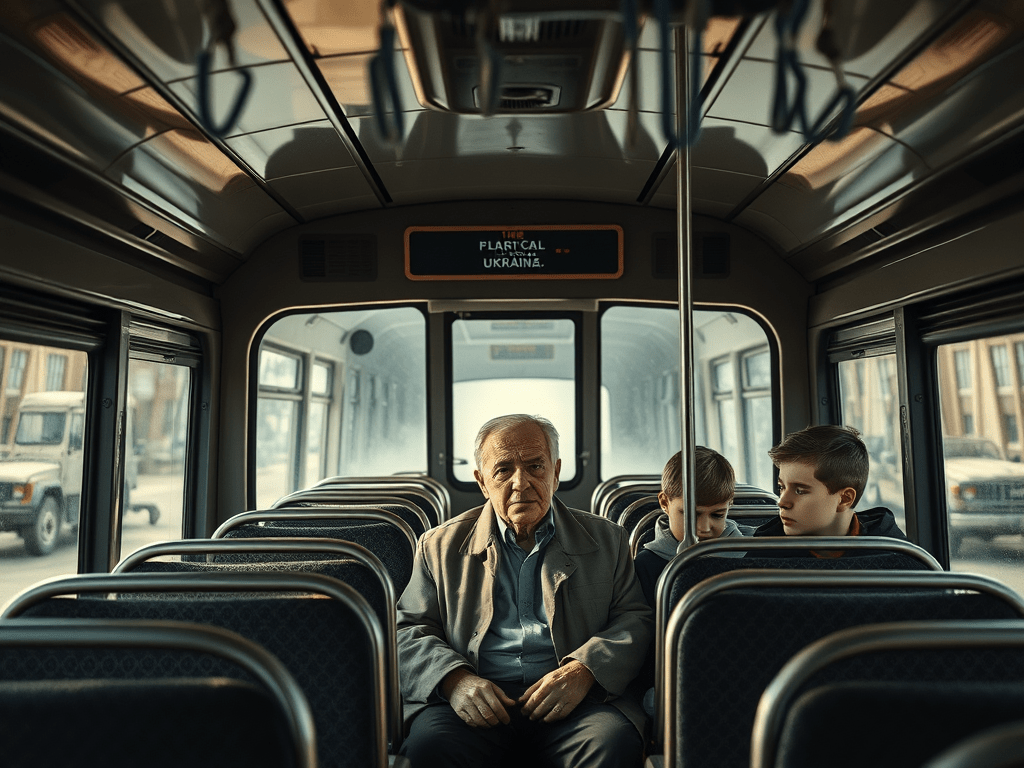
As it stands, I would not want to be a fighting age male in Ukraine right now. I probably wouldn’t want to be a fighting age male in other parts of the world either, for that matter. This thought has occurred to me before today. The first time it really hit home was when I boarded a bus to Ukraine towards the end of ’22. I was aware of martial law and what it entailed. Even so, it took me a while to register why there were hardly any guys on the bus — just a few young boys and an elderly man. It hit me then that the expectations placed on men and women in a country at war were vastly different. The levels of restriction each experienced under martial law were also very different. If it seems an obvious realisation, it is – but it took that moment to really feel it.
I do not know for sure how I would think if I were male instead of female, but I suspect my views on conflict and the military would be much the same. These views are not something which are tied to my sex or gender, as much as they are to concepts of right and wrong, past experience, and understandings of the way the world works. So, if I were a man, I could be facing the possibility of conscription or mobilisation, which would be at odds with my conscience – at least as far as the military in its current form goes. This would leave me with limited choices. I was going to say it would leave me with ‘difficult decisions’, but if push came to shove, there might be no deciding about it at all.
I was curious to know how males in Ukraine felt about this possibility, and I got a chance to find out when I met a group of three young guys who were internally displaced persons from another part of the country. “Yes,” one of the guys joked darkly, “we’re all meant to want to go to the enlistment office and sign up for our sub-machine gun”. The three of them had no intention of doing so – “we help in other ways”, and that seemed fair enough to me. But there was a potential expectation on them, and they were only too well aware of it – it was best not to draw attention to oneself in any way, as that could result in being called up. That was more than three years ago now.
The mobilisation of males seems like something as old-fashioned as the idea of the military itself. In today’s world, where men and women are generally perceived as equally capable of performing roles that were once strictly for one or the other, it feels a very outdated concept. Women have proved themselves capable as soldiers – so that can’t be a concern. And men can be just as averse to engaging in warfare as women, for equally valid reasons. So, this begs the question – why have mobilisation for some and not others?
I have seen one line of reasoning that suggests women, by way of giving birth to children, must be spared for that reason. To my mind, this too is an old-fashioned sentiment. While it’s true that males are not as critical to have around in terms of the physical bearing of offspring, the idea that they are somehow less necessary to the rearing of children more generally deserves careful thought. In an age where many people are choosing not to have children at all, the idea of exempting women for that reason is also questionable.
Maybe the question at its root is this: should anyone be forced to go to war? And regardless of gender, are some better suited to going to war than others? A military recruitment page I looked at specifies that recruits must be willing to go to areas of active combat operations, as well as being psychologically sound and of good moral character. We might question whether anyone willing to go into active combat can really be psychologically and morally sound in the fullest sense of those words. To be prepared to die, to take life, and to willingly engage in physical fighting, would not usually be associated with full psychological and moral soundness. Outside of the context of war, it would generally sit closer to definitions of insanity and mental disorder.
Naturally, this takes me to the next point – that of necessity. It’s all very well to sit at a safe distance in the relative quiet and comfort of civilian life, offering criticisms and commentary. I can’t claim I come from a long line of pacifists: at some point my own ancestors decided that Hitler’s Germany was enough of a threat to warrant taking up arms. But is that still the answer? These are not the days of Nazi Germany, and the world has moved on in so many ways. Nevertheless, threats from dictators and the use of force remain present today, just as they were back then. When I think about what I would personally be willing to do, or how far I would go, my conclusions generally come back to the same point: the military, yes – but without the violence. I sense this is a bit like saying “the church, yes — but without the religion” in that it represents a fundamental contradiction of what these institutions are all about.
Incredulous responses are perhaps to be expected. How can an institution that has always been about ‘fighting with enemies’ possibly be about anything else? Well, I would argue that there are potential ways to make enemies see the error of their ways that don’t involve physical fighting and bloodshed. Yet the old views and ways are so deeply embedded and entrenched, as to be almost beyond question. First, we have the idea that males are naturally obvious candidates for fighting. Then there is the idea that physical fighting is what the military does, and that it’s a worthy, noble and honourable thing to do. Finally, there is a narrow definition of fighting that necessarily involves guns, tanks, drones – or whatever the latest lethal invention might be. The idea of fighting without recourse to violent means is out there. It just hasn’t gained much traction yet.
Image credit: A.I.
-
Peace, Connection and Community
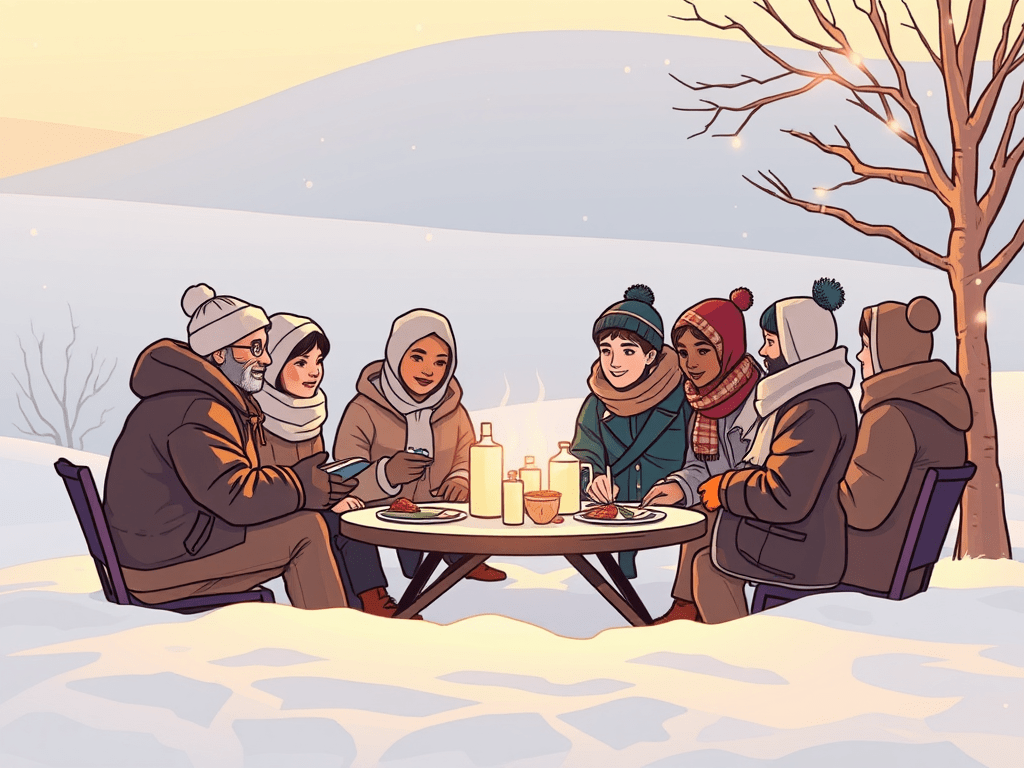
It’s the season for looking back. There’s nothing like the change of year and a scuff of Winter snow to feel in the mood for some reflection, so here we go.
Last year, I spent Christmas with Christians and New Year’s with Buddhists. This was for practical reasons and a wish for company, not because I was looking to infuse the season with spirituality. At Christmas I attended a community dinner organised by a local church. I was very grateful to be able to go there, and sit with others in a place that felt suitably Christmassy, and eat a traditional Christmas dinner. I am not a Christian, and neither were all of the people attending the dinner. Some were widowed pensioners. Others were people doing it tough. Some were like me – just those who would otherwise have found themselves alone, or living in a new place without connections.
This is one of the things I like about The Church – not just Christian churches, but any church or religious group that makes people feel welcome whoever they are, and whatever their circumstances. The other thing I like about churches is that church communities are often actively on the lookout for ways to help others. Volunteer work is another way in which I have found myself mixing with members of religious communities or churches. A third thing I like is being inside a physical church. I like the fact that they are usually quiet. Sometimes I step inside a church just for a quiet moment – somewhere to take a deep breath, reflect and spend some peaceful time.
In light of all of these reasons, I have sometimes thought about joining a church. The issue is that I don’t meet the one key pre-requisite, which is having a belief in God. Nor do I believe in any other deity, or deities. This makes church membership rather problematic. I am sure that many members of church communities, perhaps most of them, would be only too happy to share and impart their teachings anyway. I am generally curious to learn about these teachings. But that’s it — I am simply curious in an objective kind of way. It is not a curiosity with any view to building belief or finding faith. Worship is out of the question. I have had ample opportunities to find God. I have faced circumstances in which I might reasonably have been expected to find Him. I found other things, but not God.
It is my understanding that God is like the glue that holds church communities and their members together. In Christianity, this ties into ideas about service, sacrifice and beneficence to humankind. Dedicated Christians serve God, and serving God means serving humankind. Because all humans are perceived to be part of God’s plan, they all need to be looked after and cherished. As a non-Christian I cannot see why dedication to humanity and helping others has to hinge on having a belief in God. I know, it doesn’t, yet it seems that many of the more committed organisations that help others, particularly the grassroots kind of ones, take their inspiration from a deity. It is the foundation of their community and togetherness; the very basis for their spirit of service.
Last New Year’s I was once again looking for company and community. There was a cat, a very lovely natured cat, but there is only so much one can say to a cat before it becomes a bit repetitive and one-sided. The city was promising all manner of ‘Hogmanay’ celebrations. I was looking for something that didn’t involve a primary emphasis on drink, drunkenness and partying. The Buddhists were offering that alternative. When the clocks struck twelve, the chanting of mantras marked the beginning of a new year. I liked the mantras for their tone and rhythm. I could relate to the ideas around compassion, love and simplicity. But again, there was an element of worship and belief which I struggled with. I met a non-Buddhist couple there who’d given up drinking that year. Like me, they were there for reasons of not wanting to stay at home alone, while avoiding the booze. We agreed that it seemed there were few in-between options.
A year has gone by. Thoughts about where to spend Christmas, or that New Year’s might be spent sitting at home alone, have paled into irrelevance. Christmas and New Year’s in a country at war present altogether different realities. In fact, it is easy to lose sight of festive occasions altogether, at least in the sense of thinking that one ought to be making something of them. Community is found in the things that can usefully be done together, out of necessity. There is enough commotion in the air some nights to be grateful for simple existence by morning. Planning to go anywhere carries an element of risk assessment, and a consideration of necessity. Curfews and interruptions to the internet must be taken into account when straying into new places. Fireworks are banned.
When the night involves flying things – not bats, or owls, but drones and missiles – thoughts tend to be along the lines of “go away, dastardly flying things”. Except that in wishing them “away” there is the very sobering realisation that they will go somewhere. There is the sound of attempted interception of the flying things – valiant efforts that go on at all hours of the night. Inevitably, some will still get through. “Not children – not to a house with children”, I find myself thinking. There is this tendency to start prioritising lives. Better my place, than a house with children, on two counts: one that I have lived longer; two that adults are more capable of coping with such things, should they survive them. By morning proper, the news carries reports that drones hit an apartment building and a number of children were injured. There is more talk about “negotiations” and peace talks with Putin, and commentary on Trump’s assessment that Putin “wants Ukraine to succeed”. It is hard to imagine any other situation in life where a confirmed terrorist regime and its leader are afforded serious consideration and air time.
The ‘frontlines’ of this war are in two places. They are in the places that have traditionally been ‘frontlines’ – those where fighting takes place. And they are in the civilian places – in the towns and cities where people live their lives, where children try to sleep at night, and where daily life keeps on keeping on. This New Year’s it is with a degree of hesitation that I wish anyone a “Happy New Year”. Even the most committed optimist might struggle with the sentiment. As usual, places not at war will discharge huge amounts of money into the night sky in the form of fireworks. There will be parties and celebration. This year, all I hope for is peace. “May our skies be peaceful”, as someone put it.
Image credit: A.I.
-
A note about Christmas
Wishing everyone who reads this a peaceful Christmas. The text below is a note specifically addressed to those involved in the war against Ukraine. I feel the theme of peace is relevant throughout the world at this time.
—————————————————————————————-
To: All soldiers of the Russian state
Subject: A note about Christmas
In case you missed the memo, it’s today – 25th December 2025. We don’t all celebrate Christmas in the same way, if we celebrate it at all. And we don’t even necessarily celebrate it at the same time. If you follow the Julian calendar instead of the Gregorian one, Christmas can land on a different day. Christmas means different things to different people. For some, their understanding of Christmas is based on a Christian tradition. For others, Christmas is a time to spend with family; a time of feasting and of fun. Across all traditions, Christmas is a time of peace.
In the popular imagination, Christmas has become linked to certain symbols and stories. It would be wrong to assume that these symbols are universally understood and interpreted in the same way. I will set out five of the common ones below so as to avoid any confusion.
- Things that fall from the sky: snowflakes.
In the Northern Hemisphere, where it’s Winter, snowflakes have become synonymous with Christmas. They appear in Christmas imagery, and on Christmas cards – even in places where it’s Summer. I am guessing you get plenty of them in Russia. I hope you take time to enjoy the peacefulness of falling snowflakes.
- Things that fly through the air: sleighs and reindeer.
Neither of these things typically fly, but at Christmas time they do. Sleighs and reindeer take on magical properties. They cover vast distances across the globe to deliver gifts, visit children, and spread the magic of Christmas.
- Things that go bang: Christmas crackers
Like them or not, these decorative little things that make loud noises are often present at the Christmas table. Both sides take an end and pull on them, and BANG! Usually there’s a (not very funny) joke inside, and maybe some candy or a plastic toy.
- The big man in red: Santa Claus
He is known for being jolly and shouting “Ho Ho Ho” a lot. Santa Claus always knows what you’re up to. He keeps track of everyone at all times, 24/7. He knows who’s doing what, and why. He has eyes in the sky (see “Things that fly through the air”).
- “An early start”: typically a comment from parents of young children on Christmas Day.
Children are often so excited, they can hardly wait for Christmas to start. At 6 or 7am, they will be under the Christmas tree. They will be eager to open presents they may have been admiring for days. Some might have been shaking and squeezing them to try and figure out what’s inside.
As you can see, Christmas can mean different things to different people, but there are common themes of peace, humanity and caring. I hope this little note about Christmas is helpful. And for those who prefer a musical version, there’s this. May peace be with you at this time.
-
Towards a Lasting Peace
I had hoped not to finish the year writing about conflict and the military, but things being what they are, here I am and there it is. I have contradictory feelings when it comes to the military. I believe it is possible to be grateful for the military in the sense of protecting civilian populations from greater harm given present realities, yet to question the existence and relevance of the military into the future. It isn’t easy to draw any straightforward conclusions about the existence of the military as an entity. Given the history of global conflicts and the ingrained presence of militaries as an institution, it would be naïve to think – or hope — that they will just quietly disappear. If there were no militaries, and no investment in ever more lethal armaments, where would that place us? Two things that might be worth considering here: 1) How the military is portrayed and presented to the public imagination matters 2) Individual and collective mindsets of those in countries that are not at war matter.
With all the talk of peace deals in Ukraine, one thing is noticeably absent from the picture. What is missing in the talks and coverage, is that this moment represents more than a chance to secure a just and lasting peace for Ukraine. This moment represents a chance to set an alternative course for what happens in future. In fact, even the words ‘lasting peace’ could lead us to ask: “How long is ‘lasting’?” Zelensky recently spoke at the Dutch parliament. What he said about Putin and Russia is clear and straight to the point – bullies and murderers must be held accountable. And that means accountability in a legal sense, but also – as Zelensky points out – in the sense of addressing what is behind their behaviour; the drivers and motivation for it. This is a critical element in changing the current trajectory.
It would be unwise, however, to look at accountability for Putin and the Russian state without looking at the way that military thinking and mindsets have contributed. Some would point to Putin’s invasion, and place the cause of the problem squarely with his blatant violation of international law and territorial sovereignty in invading Ukraine. While that is certainly a very large part of it, it is not the whole of the problem. Military thinking, a view that ‘might is right’, and a persistent belief that having enough guns, drones, tanks and troops will eventually settle any conflict, is also part of it. That thinking comes from a long history where military responses and ‘resolutions’ have been the go-to reaction. We could consider it high time to invest wholeheartedly in efforts to prevent conflict, and how to non-violently resolve it. Individual citizens must be the driver of this change.
The Russian invasion of Ukraine is not simply a case of one big bully, or even a bully with a handful of cronies. If it were a schoolyard where this was happening, the case of the recidivist bully who doesn’t heed warnings might elicit a relatively simple response of teaching that bully a hard but necessary lesson. In the case of Putin’s war-machine, there is the bully and his cronies, but also a whole lot of boys with sticks, and a very large crowd of onlookers. If it were the school we were talking about, it would be like a large number of the boys were all involved in the bully’s scheme, believing they were doing the right thing by helping him. Some of those on the sidelines might be cheering them on, while some remained silent and others looked away. This means that accountability for Putin is only one part of the solution. There must be a serious attempt to convey to the average Russian soldier that what they are doing is messed up, hopeless, depraved and toxic. The average Russian citizen must be made just as aware of this. How might this level of awareness be developed?
The rhetoric we hear coming from NATO, and the presentation of the military and how it sits in the popular imagination, is again something which requires careful thought. Billboards featuring soldiers outlined resolutely against a blue sky, with snazzy sunglasses and fancy kit, are presumably designed to create a certain impression of what it’s like to serve in the army – even though the reality may be much different. This presentation of the military is presumably designed to encourage people to sign up and go to war. But, attempting to create a glorious impression of the military surely isn’t helpful to securing a long-term, lasting peace. NATO video clips with tanks traveling at full throttle, blazing gloriously towards battle, are likewise unlikely to represent the day-to-day reality. These are sanitised, selective portrayals of war and the military. They are propaganda.
Mark Rutte, the secretary general of NATO, recently said that Europeans must be “prepared for the scale of war our grandparents and great-grandparents endured”. Rutte is right in that the situation in Ukraine is as much a concern for Europe as it is for Ukraine. While Rutte meets with troops and talks about war readiness, it is possible that Europeans need to be more generally prepared for hardship – and that starts with the average person. How many Europeans would take a 5-day blackout and no water in their stride? Repeated power cuts are nothing unusual in Ukraine. Maybe Europe could introduce “Ukraine Days” where the national grid is disconnected region by region for a few days at a time, so that people understand just how easy it is to take these everyday things for granted. Or maybe airports could randomly close for a few weeks at a time – “Sorry, the airport is closed today – it’s a Ukraine Day”. This kind of interference with everyday life could serve as useful preparation, even without the element of psychological terror that comes from repeated missile strikes.
President of the European Commission, Ursula Von der Leyen, talks about the freedom to live the European way of life, referring to traditions of democracy, and diversity within unity. Europe, as with other developed nations and parts of the world, will face issues of purpose and priorities in the coming decades. Again, this is as much an individual problem, as it is a collective one. In Ukraine there is a sense of purpose that is hard to find in other places. In large parts of the Western world, life has arguably become altogether too easy. The essence of it revolves around being comfortable, having fun and pursuing trivial entertainments – all of which are frequently taken for granted. On an individual level, the same holds true. The rise of the ‘appearance-focused age’, where everything is potentially fodder for an Instagram or Facebook feed, has contributed to significant changes in the mindset of individuals. Western cultures have seen a rise in self-focused viewpoints more generally – from pursuing beauty treatments, fashion or the latest iPhone, to the mindless scrolling of memes. This could be said to represent the ultimate in freedom to live the way we want. These actions represent the right to make choices, yet they offer nothing of substance. How valuable would it be if the sense of cohesion, purpose and dedication to community building was as all-consuming in other parts of the world as it is in Ukraine?
European societies and the people within them have choices to make – both individual and collective choices. On a collective level Europeans can choose to pursue the path of preparing for war the way the world has always known and done – through governments encouraging or requiring military service, through citizens doing what they are told and fighting the citizens of other nations, by investing in arms, building a bigger defence industry and through generally trying to keep fighting fire with fire. This is what happened in past World Wars, and it would seem that some – particularly those of the older generation – would have us keep doing more of it, even though it has not prevented new conflicts from arising. Or, Europe can start to think about alternatives to doing more of the same, and instead start putting time and effort towards establishing a healthier psychological pattern. Even with Putin deposited in The Hague and a war crimes tribunal in place, the mentality underpinning what the world has come to recognise as the Russian war machine – and others like it — needs to be actively challenged by means that don’t involve doing more of the same. There comes a time when hurting bullies the way they are hurting you, does nothing further besides creating a vicious cycle.
So, what does that leave? One option is to try something radically different as a means of getting to the root of the inhumanity that is the Russian war machine. Rather than sending more bullets, artillery shells or drones across the frontlines, it could involve air-drops of a different kind – something to make those soldiers stop and think about what exactly it is they are doing, in a way that maybe hasn’t been tried before. It would seem that after almost four years of conventional war, and the development and adoption of ever more technologies of warfare, a radical change in approach might just be worth a try. There is little to be lost in discharging some radical humanity at the opposing side and seeing how it lands.
Finally, a note about the so-called ‘Coalition of the Willing’. This is something of a contradiction in terms when it surfaces only after three years of all-out war. The idea of stationing troops, or some other force, once a ceasefire deal has been hashed out arguably does not fit the standard definition of ‘willing’. Again, there is mention of military support. A true ‘Coalition of the Willing’ in more than just name or rhetoric would be willing to go the moment there was a hint of trouble in the air. In the case of Ukraine, that would have meant deployment on or around February 24th 2022. Rather than resorting to the same old stuff with tanks and guns, this would be an unarmed force to observe, resist and try something new. The start of any attempt at gross violation and inhumanity represents a simultaneous opportunity to turn that behaviour around right when it surfaces. In an earlier article I referred to the resistance of ‘tank man’ standing his ground, shopping bag in hand, in Tiananmen Square. These are the kinds of actions that could represent a turning point. However, in order to have a true chance at success they would require just as much commitment and investment as any of the strategies currently in use. It would take a great deal more than government announcements and world leaders making speeches. It would require an investment on the part of every person, and the willingness to stand together for as long as it takes.
-
Subscribe
Subscribed
Already have a WordPress.com account? Log in now.
 Fuzzy Brown Line