I have been walking in what Google AI might term “life-affirming terrain”. The AI and I had been in conversation about my recurrent lower back pain at night, and what the key to alleviating this might be. Amongst a raft of rapid-fire advice, from exercises I might like to try, to when to urgently seek medical help, there was this comment about “life-affirming terrain.” It made me laugh. It was interesting, though, because I had confessed to the AI that I liked to frequent the mountains with heavy loads on my back, and it seemed that the implication here was that the mountains were not “life-affirming”, and I should think seriously about going elsewhere – at least temporarily. It just so happened that I was due to leave the mountainous country anyhow, so it was perhaps inevitable that I would find myself in just such “life-affirming terrain” at some point down the track.
I will take a moment to add that an AI version of Dr. Google was never something I specifically requested. Nevertheless, the word “thinking” along with a pulsating dialogue box, followed by a long and detailed response, have become something I have quickly got used to. As far as I know there isn’t an off-switch for this supposed advancement – one has to use other means of going back, if going back is what is desired. I think it’s amazing how some of these new developments get rolled out with hardly a whisper of discussion, and not so much as a question as to whether it is something we think we really need or want. I can remember when something as relatively minor as a change of formatting was something you could try out early on, or else delay adopting until later. Even that wasn’t exactly a true choice, but it was more of a choice than some of the recent developments have been. When it comes to things like the energy involved in running AI data centres, it is perhaps interesting that it isn’t a case of opting-in.
Anyway, I digress. The AI doctor had mentioned the amount of extra strain that was required in walking uphill, particularly with a heavy load on one’s back. I have to admit there are other ways, apart from the extra strain involved in going uphill, in which the mountains might be less than life-affirming, or even life jeopardising at times. On my last trip in the mountains, after the trip to the alpine basin I wrote about in my last blog post, I revisited another route I had travelled part of on a previous occasion. On that previous trip, I had made the classic mistake of following an easy feature of the terrain – a nice bench running below the main ridge – as far as it would go. At the end of it I was faced with a short but steep climb up a gully, the top of which sported something approaching cornices. I managed to find a reasonable route up to the top that steered clear of these, but it was not a line I would choose as a snow route a second time. This time I did not follow the bench to its bitter end, and instead chose to angle upwards much earlier.
This was easy enough to do. Looking at the slope angle, and the consistency of the snow, and the run out below, I considered the possibility – and consequences – of an avalanche. There were many memorials to avalanche victims around these mountains. Somewhere in the depths of my memory bank, I recalled that walking across a slope as I was about to do here, was effectively like perforating a line in the snow where the whole lot might have more reason to let go. Now, I was not sure how much that applied here, and I was also aware that I was pushing the limits of my knowledge and understanding of avalanche risk. There was also a thought that the mountains sometimes presented these situations where the risk of continuing might feel somewhat unacceptable, yet turning around and going back would present its own set of risks. So I continued, with a methodical but steady progress across the slope, and then up onto the ridge. Getting away with something wasn’t confirmation it was OK – that was another classic mistake, but I had made it. There was a sense of satisfaction in having chosen a better route this time in light of what I’d learned last time.
On my recent venture in life-affirming terrain, I had ample time to reflect on the nature of different outdoor experiences. Sometimes there is a sense of nostalgia for something, without even realising we have a sense of nostalgia about it. That was the feeling I had when I pushed open the door of the first long-drop toilet I encountered on this journey. It was a wooden structure, with a bit of long grass around the door, and that slightly musty smell that I had all but forgotten. Suddenly I realised that this whole experience – of camping in a tent, maybe by a bit of water that was swimmable but not particularly spectacular in any sense, with a long drop toilet and a place to make a fire – this was the essence of the camping holiday we would have once a year when I was a child. We would drive around until we found somewhere by a river, or even a little creek. Many of the campsites were just like this. There would be the long-drop toilet with the resident spider, the pleasant grassy places to pitch a tent, the fire grate, and maybe some other families with their tents. That was before huge numbers of people started to put pressure on everything, and before moves to modernise and update the camping experience had taken hold. At some point the wooden toilets had been replaced by plastic ones. ‘No camping’ signs had started to appear. Gravel surfaces started to replace grassy ones – vehicles had become larger, and people wanted to drive further and closer than before. The paid campsite, complete with enforcement officers to check all campers had paid their fees, became common place. Something had changed.
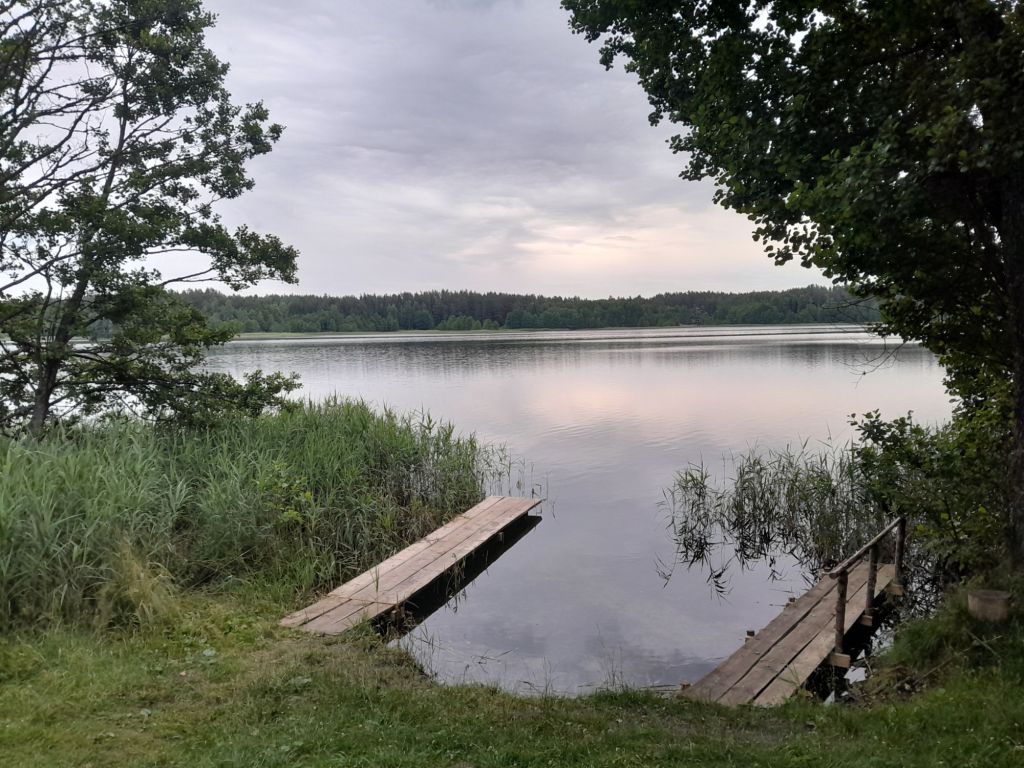
Now, this one long-drop toilet had suddenly made me realise something which I didn’t even realise had been lost – the joy of a basic camping existence, and that in life-affirming terrain. I would come across grassy spots with beautiful outlooks across lakes, where I assumed there must be a ‘no-camping’ sign just up ahead somewhere. Instead, there were signs saying you are welcome to camp here, help yourself to some logs from the shed for a fire, please keep the place clean and use only what you need. And you are welcome to boat on the lake, as long as the boat doesn’t have a motor. These rules made a lot of sense, I thought. Boats with paddles and sails were aligned with nature, and the peace of the surroundings. Boats with motors were loud, fast and potentially dangerous to others on the water, yet they had been unquestioningly normalised in many places as if it was somehow a ‘right’ for some to go somewhere and disturb the peace and enjoyment of others.
Towards the end of my walk, I started to slow down. This is something I find often tends to happen on long walks. Concerns about how well supplies might last the distance start to diminish, and a certain sense of just cruising along sets in. I had been using my phone as sparingly as possible, in order to conserve the battery. It occurred to me that I had navigated without a phone once. Now, I had become accustomed to frequently checking my location on the map, just because it was nice to know exactly where I was at any time. Technology had made it possible to do so. As I got closer to civilisation, I started to pay more attention to some of the notifications popping up: news headlines and messages with details of events and incidents happening in other parts of the world. Not for the first time, I considered the ethics and value of walking around like this, the way I had been doing. I looked at images of destroyed buildings – things that people had cared about, which had been purposely destroyed. There was a short clip, in which a fireman tossed aside a sheet of iron, in a move which must be repeated every day in the course of putting out fires.
I had reached the final lake in what had been a series of legs from one river or lake to the next. All that really mattered was making a bit of progress each day – some days were longer; others shorter. I got up with the sun – well, a bit later actually, as daylight arrived incredibly early around here – and went to bed when it finally got dark. Along the way I had picked berries, gone for a swim most days, and lived constantly in whatever the weather was doing that day. It was a very simple existence. My back felt OK. Life was good. It had been a long walk on flat ground.